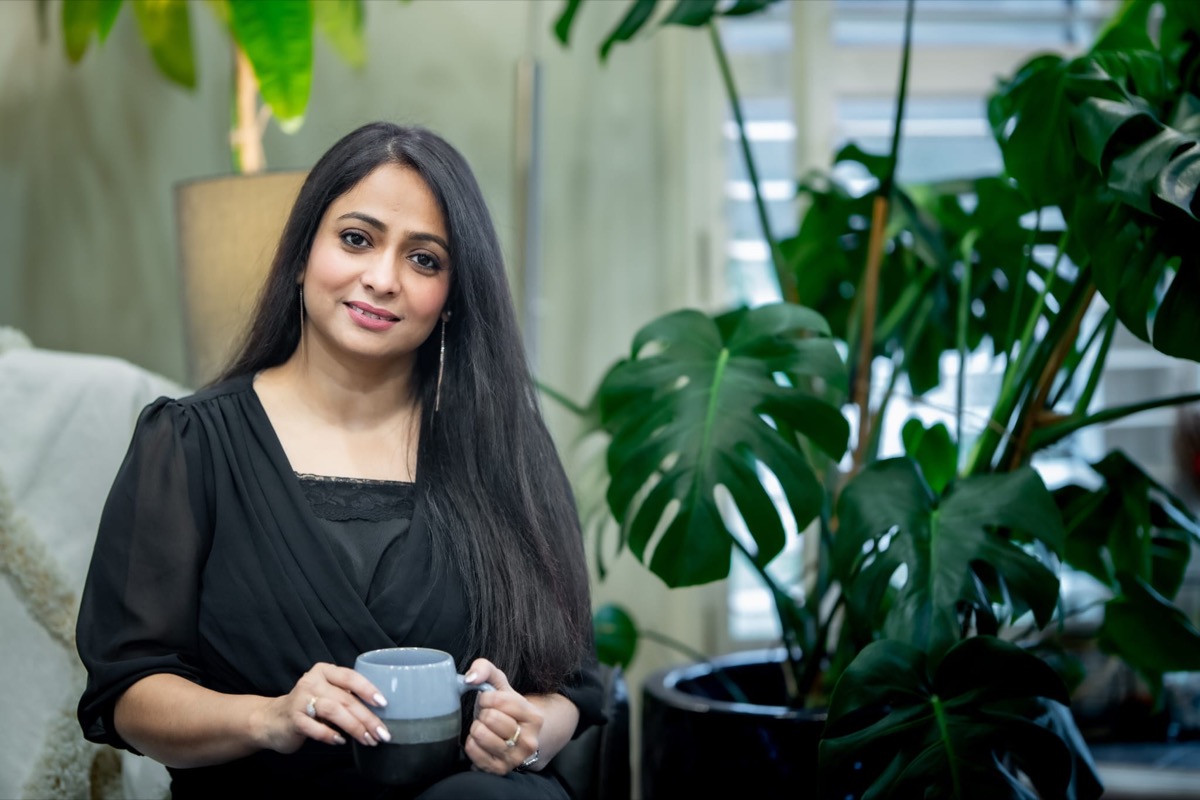
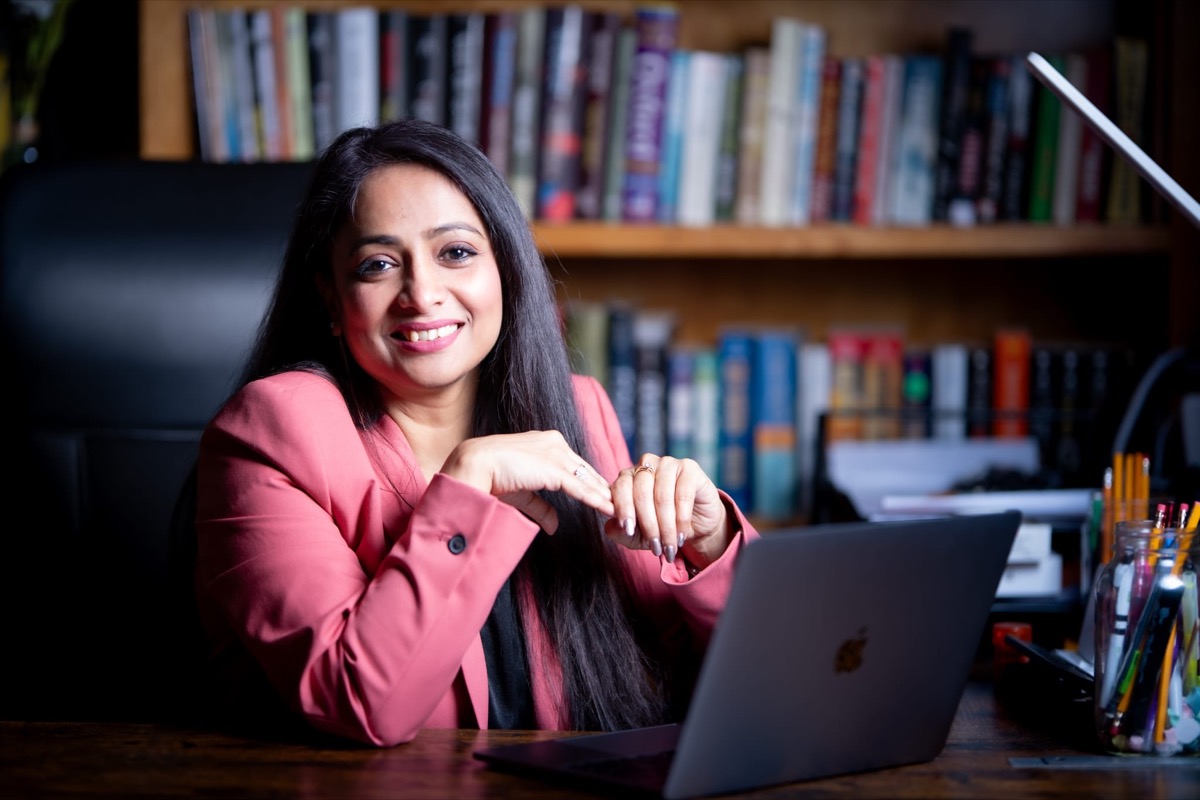
I'm Syeda Zohora, a Registered Psychotherapist (Qualifying) and a Bangladeshi woman who spent more than 30 years living in South Asia before immigrating to Canada as a single mother. The pressure of family expectations, the weight of carrying two cultural identities at once, the particular exhaustion of not quite fitting either world , I know these things from the inside, not from a textbook.
I grew up in Bangladesh. I spent my childhood, my education, my early adult years, and my parenthood inside South Asian family and social life. That means I understand, without needing it explained, what it feels like when your parents' approval is the air you breathe. I know the particular weight of collective identity, where your individual choices are understood as reflections on the whole family. I know what it costs a South Asian person to say out loud that they're struggling, when the script has always been to manage privately and present well.
When a client tells me their parents are pressuring them to marry someone they don't choose, or that they feel guilty for building a life in Canada that looks different from what was expected, I'm not working to understand that context. I already carry it. That's different from a therapist who has read about South Asian family dynamics, however carefully. The understanding that comes from 30+ years of lived experience is qualitatively different, and it changes what becomes possible in a session.
I also immigrated. I know what it means to arrive in a country where the social rules are different, where the way you dress, speak, and relate to authority all carry meanings you didn't intend. I came here as a single mother, which added its own specific pressures. The experience of living between cultures, and of doing that while raising a child without a second adult in the household, is not something I reconstructed from research. It's something I navigated. That background is part of what I bring to every session with a South Asian client.
For many South Asian clients, the most important thing about working with me isn't my credentials. It's that certain things don't need to be translated. You can describe your mother's expectations, your father's silence, the shame attached to going to therapy at all, and I'll understand the cultural weight behind those words. That saves time. More importantly, it means the session can go somewhere real faster.
I'm a Registered Psychotherapist (Qualifying), Licence #19673, with a Master of Arts in Counselling Psychology from Yorkville University, completed in 2025. I'm also a member of the Canadian Counselling and Psychotherapy Association. My clinical training covers CBT, Emotionally Focused Therapy, Internal Family Systems, DBT, Psychodynamic therapy, Narrative therapy, Solution-Focused approaches, and trauma-focused work. I practise under the supervision required at the Qualifying stage, which is a college regulatory requirement for all Qualifying members. My supervisor reviews my work and I discuss complex cases regularly. That structure is a quality standard, not a limitation.
My background is Bangladeshi. I was born and raised in Bangladesh, and I lived in South Asia for more than 30 years before immigrating to Canada. I came here as a single mother. Those facts matter for clients who are looking for a therapist who genuinely understands South Asian family structures, the weight of immigration, and the particular difficulty of building an independent life while still carrying the expectations of the family you left behind. I didn't study any of that. I lived it.
I work in English, Bengali, and Hindi. In-person sessions are available at 519 Dundas Street East, Whitby, Ontario, and virtual sessions are available across Canada by secure video or phone.
I grew up in Bangladesh. Bengali is my first language and the culture I was raised inside. I didn't learn about South Asian family dynamics in a cultural competency course. I know them because they shaped my own life. No other therapist in Canada can say they are specifically Bangladeshi, grew up in Bangladesh, and spent more than 30 years in South Asia before immigrating here. That specificity is either relevant to you or it's not, but it's real.
I immigrated to Canada as a single mother. That means I've navigated the transition between South Asian and Canadian life while parenting on my own, managing the practical demands of a new country, and carrying the social judgement that comes with being a single South Asian woman in both communities. I understand the emotional cost of that from the inside. When clients bring these themes to sessions, I'm drawing on my own experience as well as my clinical training.
My registration as a Registered Psychotherapist (Qualifying) under Licence #19673 means I'm regulated by the College of Registered Psychotherapists of Ontario and practise under clinical supervision as required at this stage. I hold an MA in Counselling Psychology from Yorkville University (2025). I'm clear about what stage of registration I'm at because clients deserve accurate information. Supervision means my work is reviewed regularly, which is a quality mechanism, not a gap in my training.
Read more about my background and approachMy in-person practice is at 519 Dundas Street East in Whitby, Ontario, accessible for clients across Durham Region including Oshawa, Ajax, Pickering, and Bowmanville. For South Asian clients in the GTA, Ottawa, Calgary, Vancouver, or anywhere else in Canada, virtual sessions by secure video or phone mean that geography is not a barrier to working with a Bangladeshi, Bengali-speaking therapist. Many clients choose virtual sessions for reasons of privacy as much as convenience, which is something I understand completely.
The difference is in what doesn't need to be explained. A South Asian therapist who genuinely grew up inside that culture doesn't need to be briefed on why family approval matters so much, or why going to therapy feels like a betrayal of the expectation to handle things privately. That shared context means more time in session can go toward the actual work. For me specifically, the difference is that I'm not South Asian in a general sense. I'm Bangladeshi, I grew up in Bangladesh, and I lived in South Asia for over 30 years. The understanding I bring is that specific.
Several things compound. There's the idea that personal problems are private family matters, not something you take to a stranger. There's the worry that seeking therapy signals weakness or failure, especially for men. There's the fear that a therapist outside the community won't understand, and the equally strong fear that a therapist inside the community might not keep things confidential. There's also the cost question for first-generation families where every expense is scrutinised. And underneath most of it is the belief that your difficulties aren't serious enough to warrant attention, when in fact they've usually been serious for a long time.
Intergenerational trauma refers to the ways that unresolved pain from one generation gets passed to the next, often without anyone meaning to pass it. In South Asian families, this often shows up as parents who express love through control, because they were themselves raised in environments where control meant safety. It shows up as silence about difficult things, because their parents were also silent. It shows up as the expectation that children will carry the family's hopes and repair the family's wounds, which is a weight no child should carry but many South Asian adults recognise immediately. Therapy helps identify where the pattern started and what it costs you to keep carrying it.
Family pressure tends to arrive in sessions disguised as something else. Clients come in describing anxiety, chronic stress, difficulty making decisions, or a persistent sense that they're failing. What often sits underneath is a long history of making choices based on what their family needs rather than what they need. The anxiety isn't free-floating. It's the result of living in a permanent state of anticipating others' reactions. The indecision isn't a personality trait. It's what happens when your own preferences have been trained out of you over years. Naming that connection is usually one of the first useful things that happens in therapy.
It tends to feel like chronic mild inauthenticity. You're South Asian in the way you think about family, obligation, and respect, but Canadian in your expectations around personal freedom and individual choice. Neither community fully claims you. You're not South Asian enough for some contexts and not Canadian enough for others. The exhaustion of code-switching constantly, of translating yourself depending on who's in the room, adds up. Therapy doesn't resolve that tension by picking a side. It helps you build a relationship with both parts of yourself that doesn't require one of them to apologise for existing.
The stigma operates at two levels. Individually, many South Asian people have absorbed the message that psychological difficulty reflects personal weakness, or worse, reflects badly on the family. Communally, there's the concern about what people will say if it becomes known that you went to therapy. Those two things work together to produce a very effective silence. What often breaks that silence is the recognition that the cost of not addressing the problem has become higher than the cost of getting help. For South Asian clients choosing virtual therapy, the privacy aspect often matters considerably. Sessions from home, with no waiting room, remove some of the exposure that makes the first step difficult.
First, actual credentials that you can verify. In Ontario, you can check registration and licence numbers on the CRPO website. Second, specific cultural knowledge, and the ability to distinguish between a therapist who has studied South Asian culture and one who has lived inside it. Third, language. If you think in Bengali, Hindi, or another South Asian language, the option to speak in that language during sessions can matter more than you expect. Fourth, an approach that suits what you're bringing. If you're dealing with family dynamics and intergenerational patterns, ask whether the therapist has specific training in those areas, and what modalities they use. The free consultation is where you ask these questions.
"Finding a therapist who speaks Bengali and actually understands what that means culturally is harder than it sounds. I spent years putting this off because I didn't think I'd find someone who got it. Within a few sessions I was covering things I hadn't been able to talk about in English. I recommend Syeda to anyone in the Bengali community who's been sitting on this."
"I'd tried two other therapists before this. Syeda is the first one where I felt like we were actually getting somewhere rather than just talking around things. Three months in, I sleep better than I have in years. The online sessions worked out much better than I expected."
"I came in thinking I needed to talk about my relationship. What we actually worked on turned out to be older than that. Six weeks in, things had already shifted. Syeda doesn't rush you but she also doesn't let you go in circles. I hadn't expected to feel any different this quickly."
I work with clients from across South Asia, including Bangladesh, India, Pakistan, Sri Lanka, Nepal, and the broader diaspora communities living in Canada. My own background is Bangladeshi and Bengali, so that's where my most specific lived knowledge sits. But many of the dynamics that come up in therapy, the weight of family expectations, the experience of holding multiple cultural identities at once, the particular pressure of being the child of immigrants or an immigrant yourself, cut across South Asian communities in ways that go beyond any single country of origin. I work in English, Bengali, and Hindi, which helps across several communities. If you're unsure whether we'd be a good fit, the free 15-minute consultation is the right place to find out.
Yes. I offer sessions in English, Bengali, and Hindi. For clients whose first language is Bengali, this matters in ways that go beyond translation. There are feelings, family dynamics, and cultural concepts that come more naturally in the language you grew up thinking in. When you're describing the pressure your parents put on you around marriage, or the guilt you carry for making choices they didn't approve of, speaking in Bengali means you don't have to flatten those things into English first. You can say what you mean in the words that actually fit it. Hindi sessions are available for clients from North Indian and Pakistani communities. If language is a factor in your decision, please mention it when you book so I can make sure we structure the session accordingly.
I do, and it's specific rather than general. I'm Bangladeshi by heritage. I grew up in Bangladesh and lived in South Asia for more than 30 years before immigrating to Canada. I came here as a single mother, which meant navigating the immigration process while parenting without a second adult in the household. I know what it means to carry the weight of a family's expectations across a migration. I know what it feels like to exist between two worlds and not fully belong to either. I know what it costs to make choices that disappoint people you love. I'm not drawing on research about South Asian families or cultural competency training. This is the life I've lived. That's a different foundation for therapy than academic knowledge, and it's worth being clear about it.
The most common themes are: the exhaustion of managing family expectations while also trying to live your own life; conflict between what your parents or community want and what you actually want; the guilt and shame that comes with making choices that disappoint people you love; anxiety that has become so normalised it no longer feels like anxiety; depression that gets masked as busyness or physical illness; difficulties in relationships shaped by how love and conflict were modelled in the families you grew up in; grief over the version of your life you didn't get to live; and the specific loneliness of feeling like you don't quite belong in your South Asian community and don't quite belong in Canadian culture either. These aren't abstract themes. They're what people actually describe in the first few sessions, often for the first time.
Both. My in-person practice is at 519 Dundas Street East, Whitby, Ontario, which serves clients in Whitby, Oshawa, Ajax, Pickering, and the surrounding Durham Region. Virtual sessions are available via secure video or phone for clients anywhere in Ontario and across Canada. For South Asian clients who live in cities with large South Asian communities, the GTA, Ottawa, Hamilton, Calgary, Vancouver, virtual sessions mean you can work with a Bangladeshi, Bengali-speaking therapist regardless of where you live. The virtual format is not a compromise. Many clients prefer it for reasons of privacy, convenience, or because they simply haven't been able to find the right fit locally. Hours are Monday, Tuesday, Thursday, and Friday from 3 to 9pm, and Wednesday from 12 to 5pm.
Yes, I work with adults of all genders. Within South Asian communities, men are often less likely to seek therapy, partly because the expectation to manage privately is stronger, and partly because there's less cultural language for men to describe emotional difficulty without it feeling like failure. If you're a South Asian man who has spent years holding things together and is now finding that harder, that's something I can work with directly. I also work with women navigating the specific pressures of South Asian femininity: the weight of being a good daughter, daughter-in-law, wife, or mother while also trying to be a person with your own needs and wants. Couples work is available too, using Emotionally Focused Therapy to address the patterns that accumulate over time in a relationship.
Individual and couples sessions are $150 per hour. A sliding scale rate of $135 per hour is available for clients who need it. Please mention this when you get in touch and we'll talk about it without pressure or awkwardness. The free 15-minute consultation before booking is genuinely free and carries no obligation to continue. I don't do direct billing to insurance providers, but I give you a receipt after every session that you can submit to your insurer yourself. Many extended health plans cover Registered Psychotherapist sessions. Payment is accepted by cash, cheque, Visa, Mastercard, or PayPal. If cost is a concern, I'd rather you ask than quietly decide not to come. The consultation is the right time to have that conversation.
The starting point is a free 15-minute consultation. It's a short call where you can tell me what's going on, ask me anything you want to know about how I work, and decide whether you'd like to go ahead. There's no pressure and no commitment attached to the consultation. You can book it through the contact page on this site, or call me directly. If you'd prefer to send a message before speaking, email works too. After the consultation, if we both want to move forward, we'll schedule your first full session and I'll send you a brief intake form beforehand. First sessions are 60 minutes. You don't need a referral from your doctor. No waiting lists, no complicated intake process.
I'm a Bangladeshi therapist who spent more than 30 years in South Asia before building a life in Canada. The cultural context you carry is the context I grew up in. The free 15-minute consultation is where we figure out if working together makes sense.