Anxiety therapy in Whitby and across Canada

Anxiety often has a physical quality that precedes any conscious thought. The chest tightens, sleep fragments, or the mind runs through a scenario so many times it starts to feel like evidence. I'm a Registered Psychotherapist (Qualifying), Licence #19673, and I work with anxiety in its many forms, in person at my Whitby office and virtually across Canada.

Licence #19673 Bengali & English sessions In-person in Whitby Virtual across Canada Sliding scale available
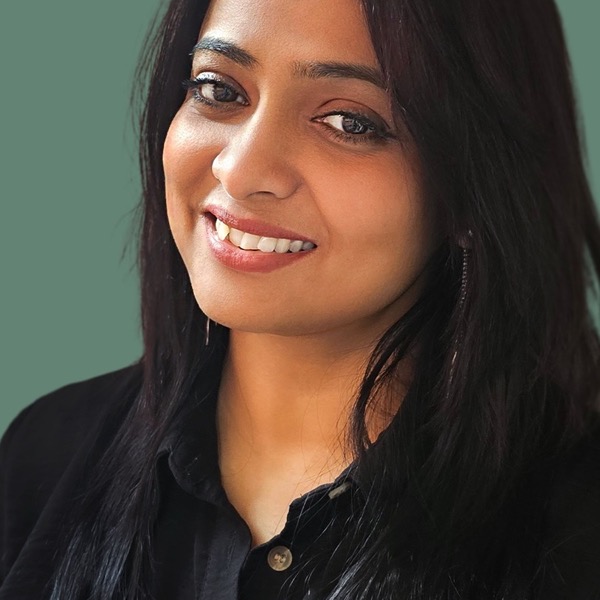
Syeda Zohora, therapist, Whitby

How anxiety takes hold, and why it often makes sense

Anxiety is the nervous system doing its job with too much enthusiasm. It evolved to register threat and prepare the body to respond. The difficulty is that it applies the same urgency to a difficult email as it once might have applied to physical danger. The result is a system that is perpetually braced: muscles held tight, thoughts looping, attention pulled toward risk. Over time this becomes the default state, and the person stops experiencing it as a response to anything in particular. It simply becomes how things feel.

The presentations vary considerably. Generalised anxiety tends to involve diffuse, persistent worry that attaches to different subjects across the day. Panic disorder produces sudden, intense physical symptoms, a racing heart, shortness of breath, a sense of unreality, that can themselves become a source of fear. Social anxiety typically organises around evaluation: the anticipation of being watched, misread, or judged. Health anxiety amplifies physical sensations into potential diagnoses. What these share is a common mechanism: the mind treating a perceived threat as more certain, more serious, or more imminent than the evidence warrants, and the body responding accordingly.

For many South Asian clients I work with, anxiety does not arrive in isolation from context. It appears alongside significant family expectation, the pressure to perform success in ways that are legible to both the family and the adopted country, the particular strain of living between two sets of norms that do not always agree. Children of immigrants often carry the weight of their parents' sacrifice as a daily obligation. Immigrants themselves frequently experience anxiety as a kind of chronic vigilance, the body still managing the adaptation long after the practical logistics of immigration are settled. These are not psychological quirks. They are comprehensible responses to real circumstances, and they deserve to be treated as such.

Anxiety that has been present for a long time also develops secondary layers. A person becomes anxious about being anxious. They start avoiding situations that have triggered anxiety in the past, and the avoidance, while providing short-term relief, gradually narrows their world. The pattern becomes self-reinforcing. Therapy is most useful precisely when that reinforcement cycle has become entrenched enough that insight alone is not breaking it.

What I actually do in sessions for anxiety

I start by trying to understand what the anxiety is doing, not just cataloguing its symptoms. In the first sessions, I'm listening for when it arrives, what it attaches to, how the person responds to it, and what has and hasn't worked before. CBT gives us a structured way to examine the thoughts that fuel worry and the behaviours, particularly avoidance, that maintain it. It also builds concrete skills for managing the physical experience of anxiety in the moment. For many people, this is genuinely useful and produces clear improvement relatively quickly.

Where I find CBT alone reaches its limits is when anxiety is less about distorted thinking and more about something the person is protecting. That's where Internal Family Systems becomes useful. IFS understands anxiety as a part, often a protective part, that took on its role for a reason. Working with it rather than trying to eliminate it tends to produce more lasting change, because the person understands what their anxious part was trying to do and can find better ways to meet that need. I also integrate mindfulness practice, not as a standalone technique but as a way of building the capacity to observe experience without immediately reacting to it.

For anxiety rooted in past experiences, including trauma or the accumulated stress of major life changes like immigration, I bring in trauma-focused approaches. I grew up in Bangladesh and spent more than 30 years in South Asia before immigrating to Canada as a single mother. That experience means I don't need a client to explain the particular weight of that kind of transition from the beginning. I already understand some of the terrain. Sessions happen in Bengali or English, whichever language allows the work to feel most natural. That choice matters more than it might seem, because anxiety often lives in the body and the first language, and working in a language of translation keeps part of the experience at arm's length.

Syeda Zohora

A background that matters for this kind of work

I'm Syeda Zohora, a Registered Psychotherapist (Qualifying), Licence #19673, practising under supervision as required at this stage of college registration. I hold an MA in Counselling Psychology from Yorkville University (2025) and a Diploma in Behavioural Science from Seneca College (2022). I'm a member of the Canadian Counselling and Psychotherapy Association. My office is at 519 Dundas Street East in Whitby, and I offer virtual sessions across Canada.

I'm Bengali, born in Bangladesh, and I lived in South Asia for more than 30 years before immigrating to Canada. I came as a single mother. The anxiety that can accompany that kind of move, managing the practical realities of a new country while parenting alone, while maintaining relationships across a significant distance, while figuring out where you belong, is something I've lived rather than read about. That doesn't mean I assume I know what a client's experience is. Every person's situation is distinct. It means I'm not starting from the outside looking in.

I work in Bengali, Hindi, and English. For South Asian clients across Ontario who want a therapist who understands the specific pressures of that cultural context without needing to explain it at length first, the virtual option means geography is not a barrier. I offer a free 15-minute consultation before any first session, so you can get a sense of the fit before committing to anything.

Read more about my background and approach →

In-person in Whitby, virtual across Canada

I see clients in person at 519 Dundas Street East in Whitby, which is accessible from across the Durham Region, including Oshawa, Ajax, Pickering, and Bowmanville. Virtual sessions by video or phone are available to anyone across Ontario and Canada. For South Asian clients in the Greater Toronto Area and beyond who want to work with a Bengali-speaking therapist with a specific understanding of the immigrant and South Asian family experience, distance is not an obstacle.

Questions worth understanding before starting therapy

How do I know if what I'm feeling is anxiety or just stress?

Stress is typically proportionate and time-limited: it arises in response to a specific demand and eases when the demand passes. Anxiety has a persistence that outlasts its trigger, or attaches to situations where the level of threat doesn't warrant the intensity of the response. Another distinction is physical. Stress tends to feel like pressure from the outside. Anxiety often comes from the inside, a sense of dread that doesn't fully resolve even when external circumstances are fine. The distinction matters clinically because the approaches that help are different, though they overlap. If what you're experiencing is affecting your sleep, your concentration, or your ability to function day to day, that's worth paying attention to regardless of what you call it.

What does anxiety actually feel like, beyond the textbook definition?

It tends to be more physical than people expect. Chronic muscle tension, particularly in the jaw, shoulders, or chest. Sleep that starts well but fragments in the early hours when the mind starts running. A sense of restlessness that makes it hard to settle into things. Concentration that keeps slipping because attention keeps checking for problems. There is also a cognitive texture: the looping thought, the scenario played out many times with the same ending, the difficulty distinguishing between thinking something through and ruminating on it. Anxiety also tends to make ordinary decisions feel heavier than they are, because the mind is assigning risk to more situations than the evidence warrants. These patterns are often so familiar to the person experiencing them that they no longer register them as unusual. That normalisation is itself one of the things therapy can address.

What is the connection between anxiety and family or cultural pressure?

Family and cultural pressure don't cause anxiety in a simple, direct way. What they can do is create conditions in which the nervous system learns to treat ordinary situations, a phone call home, a performance review, a social gathering, as high-stakes. When someone grows up in an environment where approval is conditional, where falling short has visible consequences for the family's standing or cohesion, the body learns to anticipate. It becomes good at reading rooms, managing impressions, and preparing for things to go wrong. That vigilance is often adaptive in the context where it was learned. In a different context, it can become a chronic background state. For many South Asian families, there's also the specific weight of the immigrant context: the sacrifice that was made to come here, the expectation that the next generation will make that sacrifice meaningful. Those expectations don't have to be stated explicitly to be felt daily.

What does anxiety therapy involve in practice?

The first few sessions are mostly about building a picture. I want to understand what the anxiety looks like, when it arrived, what seems to trigger it, what the person has tried, and what their life looks like around it. From there, the work depends on what the anxiety is doing. If there are clear patterns of distorted thinking and avoidance, we'll work with those directly through CBT. If the anxiety feels more like a part of the person that's been there a long time, IFS offers a way to work with it that respects its function. If there are past experiences that contributed to the current state, we'll approach those carefully and at a pace that feels manageable. Sessions are 50 minutes. The pace of progress varies, and I'm direct about what I'm observing and why I'm suggesting what I'm suggesting.

How does CBT work for anxiety and what are its limits?

CBT works by identifying the relationship between thoughts, feelings, and behaviours. For anxiety, the focus is typically on catastrophic or overestimated thinking, and on the avoidance behaviours that prevent the nervous system from learning that the feared outcome is unlikely. The exposure component of CBT, done gradually and at the right pace, is one of the most robust tools available for anxiety. Its limits appear when the anxiety is not primarily cognitive in nature, or when it's rooted in something that CBT's structured framework doesn't address as directly: early relational experience, identity, grief, or the kind of chronic stress that comes from navigating structural pressures like immigration or cultural displacement. In those situations, CBT can be part of the approach, but it works better alongside other modalities than as the only tool.

What is the connection between anxiety and past experiences or trauma?

Anxiety and trauma often share the same underlying mechanism: a nervous system that learned to stay alert because alertness was useful or necessary. When that alertness persists beyond the circumstances that created it, it shows up as anxiety in daily life, often without the person connecting it to anything in the past. Trauma doesn't have to mean a single dramatic event. Accumulated stress, chronic exposure to unpredictability, years of feeling responsible for managing other people's emotions, or the grinding experience of being in a new country without a strong support network can all leave the nervous system in a state of low-grade readiness that looks and feels like anxiety. Working with this requires a trauma-informed approach that addresses the body's response, not just the thoughts.

Does anxiety ever fully resolve with therapy, or is it something you manage forever?

For many people, anxiety reduces substantially and stops running daily life. For others, especially those with a longer history or a more constitutional temperament toward anxiety, the goal is more accurate: building a different relationship with the anxiety, so that when it appears it's less overwhelming and less controlling of behaviour. The distinction between resolution and management is less meaningful in practice than it sounds. Someone who used to have daily panic attacks and now rarely experiences them, and knows how to work with anxiety when it does arise, has a fundamentally different life. Whether you call that resolution or effective management is a matter of framing. Therapy doesn't promise the permanent absence of anxiety. It does change how much power it has.

What clients have said

Your questions, answered

From people who've worked with me

Common questions about this

From people who've worked with me

"Finding a therapist who speaks Bengali and actually understands what that means culturally is harder than it sounds. I spent years putting this off because I didn't think I'd find someone who got it. Within a few sessions I was covering things I hadn't been able to talk about in English. I recommend Syeda to anyone in the Bengali community who's been sitting on this."

Farida H. · Mississauga

"I'd tried two other therapists before this. Syeda is the first one where I felt like we were actually getting somewhere rather than just talking around things. Three months in, I sleep better than I have in years. The online sessions worked out much better than I expected."

Michael T. · Ajax

"I came in thinking I needed to talk about my relationship. What we actually worked on turned out to be older than that. Six weeks in, things had already shifted. Syeda doesn't rush you but she also doesn't let you go in circles. I hadn't expected to feel any different this quickly."

Priya S. · Scarborough

Common questions about this

What types of anxiety do you work with?
What therapeutic approaches do you use for anxiety?
How long does anxiety therapy usually take?
Are sessions in person or online?
Is therapy effective for anxiety without medication?
Do you work with anxiety related to immigration or cultural pressure?
How much do sessions cost?
How do I book a first session?
Syeda Zohora, Registered Psychotherapist, Whitby Ontario

Let's talk about what's going on

The free 15-minute consultation is a chance to describe what you're experiencing and get a sense of how I work before committing to anything. I offer sessions in Bengali and English, in person in Whitby and virtually across Canada.